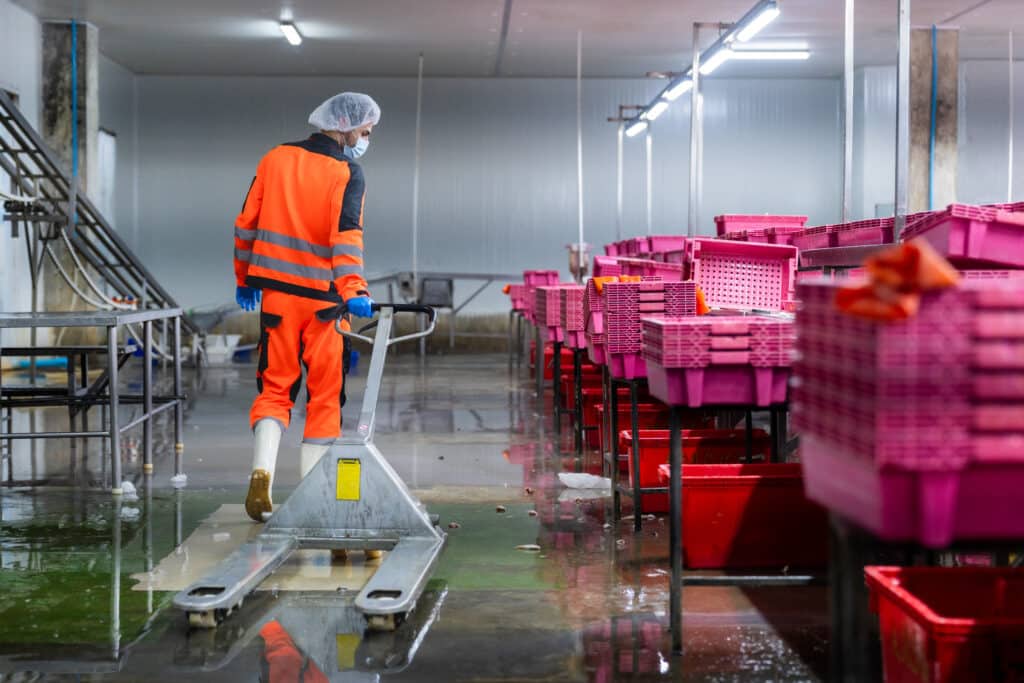
Spotless floors and wiped counters create an illusion of cleanliness. Yet many UK businesses with seemingly pristine premises still face recurring pest problems. The difference between a clean-looking facility and a genuinely pest-proof environment often lies in specialist cleaning techniques that standard cleaning simply cannot deliver.
At Dealey Environmental, our 60 years of pest control experience has taught us an essential truth: effective pest management starts with proper cleaning. Not just any cleaning, but targeted, professional sanitisation that eliminates the food sources, harbourage, and conditions pests need to survive.
Why Standard Cleaning Falls Short for Pest Control
Regular cleaning addresses visible dirt and surface contamination. Floors get mopped, bins get emptied, and surfaces get wiped. These daily tasks maintain basic hygiene but miss the hidden environments where pests thrive.
Standard cleaning limitations include:
- Surface-level approach – Misses food debris in inaccessible areas behind equipment
- Insufficient frequency – Weekly or fortnightly schedules allow pest-attracting residue to accumulate
- Wrong products – General-purpose cleaners don’t eliminate odours and pheromone trails that attract pests
- Limited access – Staff cannot safely move heavy equipment or access confined spaces
- Lack of pest knowledge – Cleaners aren’t trained to identify pest harbourage points or early warning signs
Research demonstrates that commercial kitchens subjected only to standard cleaning protocols show significantly higher pest activity compared to facilities with integrated specialist cleaning programmes.
What Makes Cleaning ‘Specialist’ for Pest Prevention
Specialist cleaning for pest control goes far beyond surface aesthetics. It targets the biological and environmental factors that create pest-friendly conditions.
Deep Access Cleaning
Professional pest prevention cleaning involves dismantling, moving, and accessing areas impossible during standard operations. Industrial ovens get pulled from walls. Extraction systems get completely disassembled. False ceilings receive thorough inspection and sanitisation.
This level of access reveals accumulated grease, food particles, and organic matter that provide ideal pest nutrition. Specialist cleaning eliminates these hidden food sources systematically.
Targeted Sanitisation
Pest control cleaning uses specific products proven effective against pest-attracting contaminants:
- Biocidal treatments – Kill bacteria and viruses that pests carry and spread
- Degreasing agents – Remove fat deposits that attract flies, cockroaches, and rodents
- Odour neutralisers – Eliminate smells that guide pests to food sources
- Drain treatments – Break down organic matter where flies breed
Proofing and Prevention Focus
Specialist cleaners identify pest entry points and harbourage during deep cleaning work. Gaps behind skirting boards, damaged seals around pipes, and cracks in walls all become visible when equipment moves and areas get accessed.
This intelligence allows proactive sealing and repairs before pests exploit vulnerabilities—a preventative approach standard cleaning never provides.
Critical Areas Requiring Specialist Cleaning
Commercial Kitchen Deep Cleaning
Food preparation areas face the most intense pest pressure.
Essential kitchen deep cleaning includes:
- Complete extraction system cleaning—ductwork, filters, and canopies
- Behind and beneath all cooking equipment
- Inside ovens, fryers, and other appliances
- Tile grouting where mould and bacteria accumulate
- Drainage systems where flies breed
UK food safety legislation requires commercial kitchens undergo professional deep cleaning every six months.
Waste and Refuse Areas
Specialist waste area cleaning involves:
- Pressure washing bins and storage areas
- Sanitising surrounding surfaces and walls
- Treating drains for fly larvae
- Removing accumulated organic matter from corners and crevices
Food Storage Facilities
Specialist storage cleaning focuses on:
- High-level cleaning of racking systems and ceiling areas
- Treatment of pallet storage zones
- Loading bay sanitisation
- Pest monitoring point maintenance
Industrial and Manufacturing Spaces
Specialist industrial cleaning addresses:
- Bird fouling removal from roof spaces and exterior areas
- Rodent contamination cleaning in storage zones
- Insect debris removal from production areas
- Specialist equipment for working at height safely
The Link Between Cleaning and Integrated Pest Management
Modern pest control follows Integrated Pest Management (IPM) principles. Specialist cleaning forms the foundation of effective IPM programmes.
IPM pyramid hierarchy:
- Sanitation (foundation) – Specialist cleaning removes food sources and harbourage
- Exclusion – Sealing entry points identified during deep cleaning
- Monitoring – Regular inspection programmes tracking pest activity
- Treatment – Targeted intervention when monitoring detects problems
Businesses investing in specialist cleaning reduce their need for pesticide treatments dramatically.
Regulatory Requirements for UK Businesses
Food Safety Legislation
The Food Safety Act 1990 and Food Hygiene Regulations 2006 require food businesses to maintain premises in a condition that prevents contamination. This explicitly includes effective pest control measures supported by appropriate cleaning regimes.
Health and Safety Obligations
The Health and Safety at Work Act 1974 requires employers to protect workers from pest-related health hazards.
Industry-Specific Standards
- Food manufacturing – BRC Global Standards mandate documented deep cleaning programmes
- Healthcare – CQC inspections assess cleanliness as infection control measure
- Hospitality – Star ratings depend partially on pest-free, sanitary conditions
- Education – School kitchens must meet LEA cleaning specifications
Specialist Cleaning Techniques and Equipment
High-Pressure Steam Cleaning
Superheated steam kills bacteria, viruses, and pest eggs without chemicals. This method proves especially effective for:
- Sanitising kitchen equipment and extraction systems
- Treating cracks and crevices where pests hide
- Cleaning sensitive areas where chemicals pose contamination risks
- Killing bed bugs and their eggs in hospitality environments
HEPA Filtration Vacuuming
HEPA filtration systems capture microscopic particles including pest droppings, bacteria, viral particles, and spores. This level of filtration proves essential when cleaning after rodent or cockroach infestations.
Working at Height Equipment
At Dealey Environmental, our IPAF-trained technicians work safely at height, accessing areas standard cleaning crews cannot reach.
How Often Should Businesses Schedule Specialist Cleaning
Recommended frequencies:
- Food preparation businesses – Quarterly deep cleaning minimum, monthly for high-volume operations
- Food storage and warehouses – Bi-annual deep cleaning with monthly high-level cleaning
- Restaurants and cafes – Quarterly kitchen deep cleaning, bi-annual full premises
- Hotels and hospitality – Quarterly specialist cleaning for kitchens, annual for guest areas
- Healthcare facilities – Quarterly deep cleaning, monthly sanitisation programmes
- Offices and commercial buildings – Annual deep cleaning, quarterly for kitchen areas
Integrating Cleaning with Pest Control Services
At Dealey Environmental, our integrated approach delivers:
- Shared intelligence – Cleaners report pest signs to controllers
- Coordinated scheduling – Deep cleaning timed to support pest monitoring cycles
- Unified documentation – Single audit trail demonstrating regulatory compliance
- Cost efficiency – Combined contracts reduce administrative overhead
- Consistent quality – One provider accountable for complete pest prevention programme
Choosing a Specialist Cleaning Provider
Look for providers with:
- British Pest Control Association (BPCA) membership
- RSPH Level 2 Pest Management qualifications
- Food safety training
- Working at height certification (IPAF)
- COSHH training for safe chemical handling
The Dealey Environmental Approach
Our specialist cleaning service reflects over 60 years of pest management expertise.
Our service includes:
- Comprehensive site assessment identifying pest risk areas
- Customised cleaning schedules based on your business requirements
- BPCA-qualified technicians with pest control knowledge
- Industrial equipment for deep cleaning and sanitisation
- IPAF-trained staff for safe working at height
- Full compliance documentation for regulatory audits
- Integration with pest monitoring and control programmes
Taking Action: Implementing Specialist Cleaning
Your action plan:
- Assess Current Cleaning – Evaluate whether existing programmes address pest prevention adequately
- Identify High-Risk Areas – Determine which zones require specialist attention
- Schedule Professional Survey – Arrange inspection by pest control and cleaning specialists
- Develop Cleaning Programme – Create customised schedule addressing identified risks
- Train Staff – Educate employees on maintaining standards between specialist cleaning visits
- Document Everything – Maintain comprehensive records demonstrating regulatory compliance
- Review and Adjust – Regularly assess programme effectiveness and modify as needed
Protect Your Business Through Professional Cleaning
The connection between cleanliness and pest control is fundamental to maintaining pest-free commercial premises. Standard cleaning addresses surface hygiene but cannot deliver the deep sanitisation, access, and specialist knowledge genuine pest prevention requires.
Contact Dealey Environmental today to discuss how our specialist cleaning services can strengthen your pest management programme. With over 60 years of experience protecting UK businesses, we possess the expertise, equipment, and commitment to transform your premises into truly pest-proof environments.