Blue Fume (Bluefume®) is a hydrogen cyanide-based fumigant used for the commercial treatment of buildings, grain stores, flour mills, food processing facilities, and other industrial structures. It acts rapidly against all life stages of stored product insects, rodents, and mites, and it carries a significantly lower environmental footprint than many other registered fumigants. Dealey Environmental holds the sole UK licence to use Blue Fume, making it the only fumigation company in the country able to offer this treatment.
What Is Blue Fume and How Does It Work?
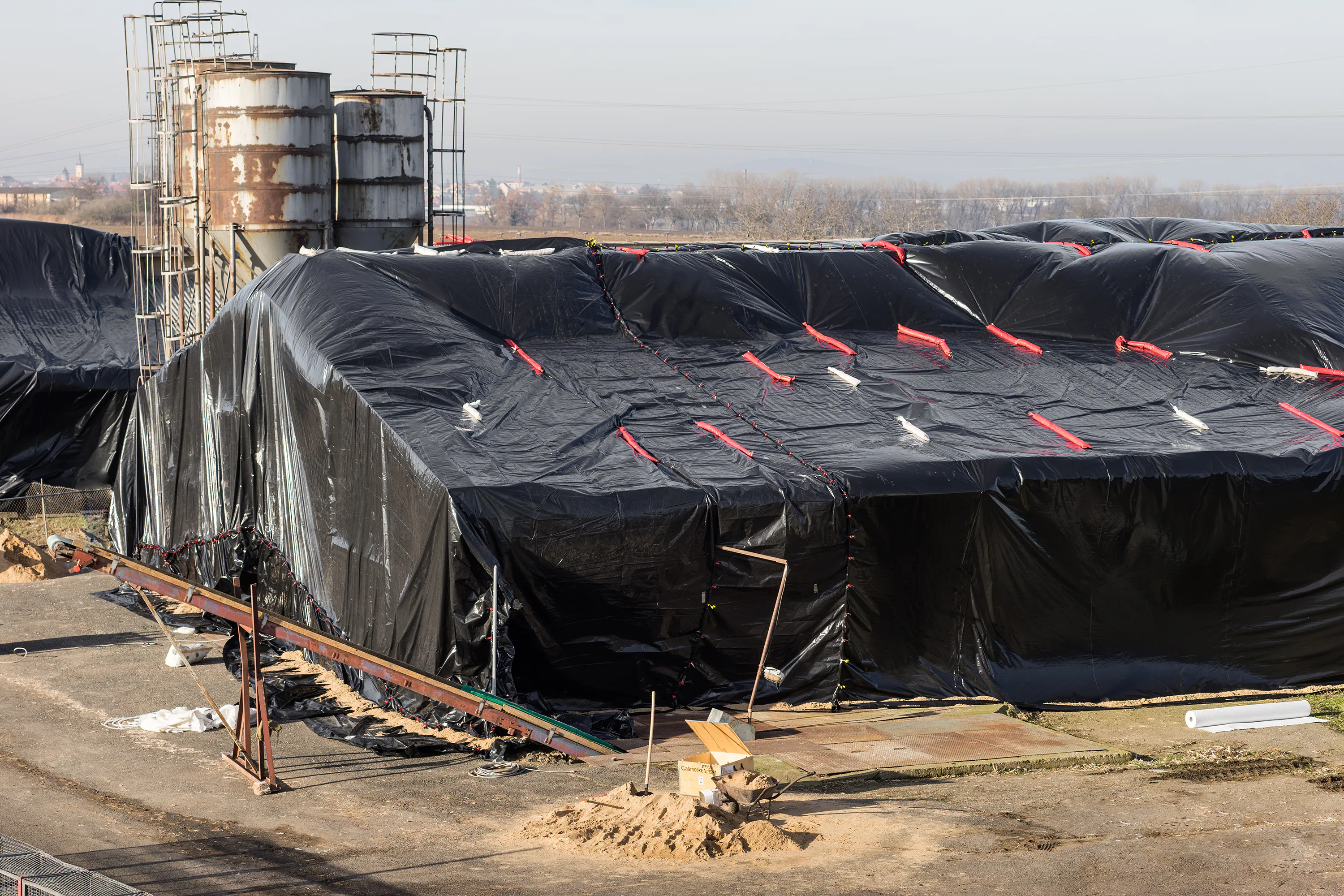
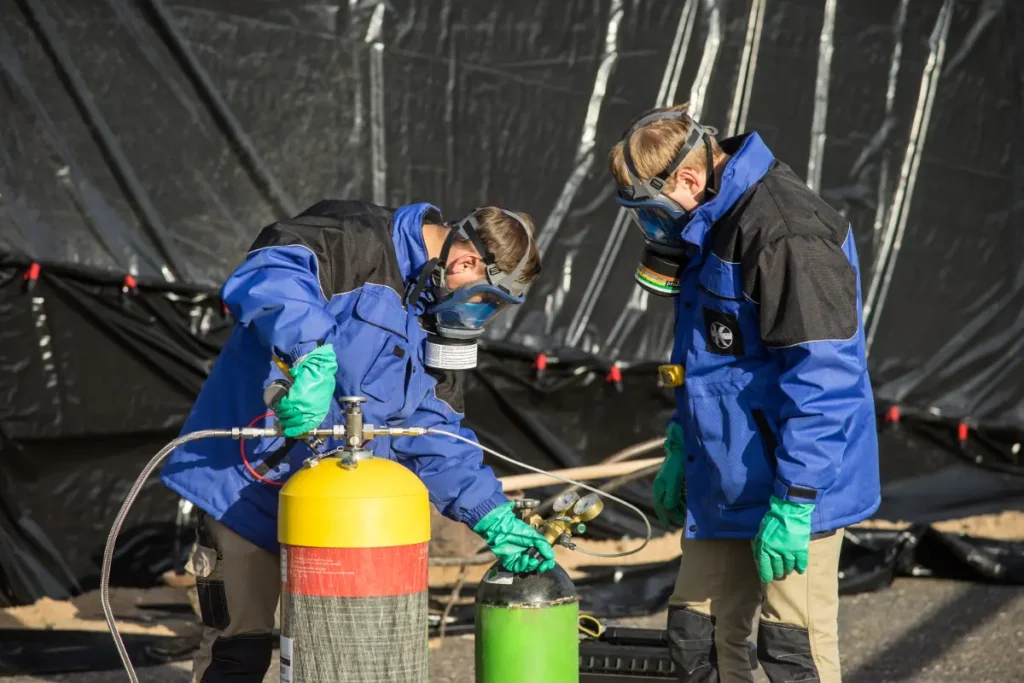
Blue Fume is a colourless, flammable fumigant with hydrogen cyanide (HCN) as its active substance. It is produced under licence by Draslovka and distributed internationally through the INTRESO group. The gas is injected into a sealed structure through a purpose-built distribution system, which can be installed permanently or temporarily, depending on the site. Once inside, it penetrates into all areas of a building, including hard-to-reach voids, grain stacks, and machinery housings, eliminating pests at every life stage.
The science behind effective fumigation is not guesswork. Dealey calculates the Concentration Time Product (CTP) for every treatment: the precise combination of gas concentration, temperature, and exposure time required to achieve a lethal dose for the target pest. Optical interferometers measure real-time gas concentrations inside the structure throughout the process, and data loggers record readings at multiple points to confirm that efficacy has been reached across the entire treated area.
Every completed treatment is backed by a clearance certificate, giving buyers and food safety auditors documented evidence that the infestation has been fully controlled.
Why Is Blue Fume Considered an Effective Fumigant?
Blue Fume delivers several performance characteristics that set it apart from other registered building fumigants.
- Broad-spectrum efficacy: It is effective against all insect pests, rodent pests, and mite pests, including mite eggs, which are among the hardest life stages to eradicate.
- Speed of action: Structural fumigation with Blue Fume is completed within 24 to 48 hours, which reduces operational downtime for businesses.
- Proven penetration: The gas penetrates deep into grain stacks, wall cavities, and building fabric, reaching areas that surface spray treatments cannot.
- No chemical resistance: Unlike phosphine-based products, where resistance in stored product insects has become an increasing concern globally, Blue Fume does not carry the same resistance issues.
- Environmental profile: Blue Fume has a Global Warming Potential (GWP) of 7, compared to figures in the thousands associated with some other registered fumigants. It breaks down in the atmosphere into compounds beneficial to plant growth and does not deplete the ozone layer.
What Types of Buildings and Facilities Can Be Treated With Blue Fume?
Blue Fume fumigation is suited to commercial and industrial buildings where complete structural disinfestation is required. Common applications include:
- Flour mills and rice mills
- Food factories and food processing plants
- Grain stores and agricultural storage facilities
- Warehouses and distribution centres
- Historic buildings and heritage structures
- Cruise ships and large vessels
- Poultry houses
Dealey does not fumigate domestic residences. Blue Fume is a highly specialised commercial fumigation service, and it is only carried out by qualified, licensed fumigation specialists.
How Does Blue Fume Compare to Other Fumigation Methods?
Understanding where Blue Fume sits within the wider range of fumigation approaches helps businesses make informed decisions about pest control.
Methyl bromide
Methyl bromide was once widely used as a building fumigant but was phased out under the Montreal Protocol due to its role in ozone depletion. Dealey’s experience is that Blue Fume is the only currently registered building fumigant that performs to a comparable standard, particularly in achieving efficacy against insect eggs.
Phosphine (aluminium phosphide)
Phosphine is commonly used in grain fumigation and grain store treatments. It is effective in certain applications but typically requires longer exposure periods. It is also registered as a building fumigant, though Dealey’s experience suggests it has not consistently matched Blue Fume’s efficacy against eggs, particularly mite eggs.
Sulfuryl fluoride
Sulfuryl fluoride has been registered as a building fumigant in some markets. Published research from scientists at Harvard University and Johns Hopkins University has identified it as having a very high global warming potential and a lengthy atmospheric lifespan. Dealey does not use it.
Is Blue Fume Safe to Use in Commercial Settings?
Fumigation with any gas requires proper qualifications, planning, and safety controls. Blue Fume is a highly toxic substance and must only be handled by licensed fumigation specialists. In the UK, a trained fumigation specialist carries a Fumigation Specialist card, which they should be willing to show to any client on request.
When carried out by qualified operators, Blue Fume fumigation follows a controlled procedure: the building is sealed, the gas is introduced at a calculated dose through a distribution system, concentrations are continuously monitored, and the building is ventilated and certified clear before anyone re-enters.
Because Blue Fume disperses cleanly and does not leave persistent residues, it poses no ongoing risk to surrounding people or businesses once the treatment and ventilation process is complete. For a full overview of Dealey’s approach to fumigation safety and measurement, visit the fumigation services page.
Who Provides Blue Fume Fumigation Services in the UK?
Dealey Environmental has been the sole registered user of Blue Fume in the UK since 2019. This exclusive position means that any business in the UK requiring Blue Fume treatment must use Dealey. The company has operated in the fumigation and pest control sector for over 60 years and is led by Managing Director Martin Cobbald, who has previously chaired the Fumigation and Controlled Environments Committee and maintains a national presence as a fumigation consultant.
Dealey’s team carries out commercial pest control, insect control, bird control, and specialist cleaning services, as well as the full range of fumigation types covered by their licences.
When Is Fumigation the Right Choice for Pest Control?
Fumigation is not always the first line of response. Dealey’s approach prioritises prevention, monitoring, and deterrence where possible. However, once an infestation has taken hold to the point where other treatments are no longer sufficient, fumigation becomes the primary remedial option.
A grain store with a confirmed insect infestation, for example, requires a treatment that can penetrate the full depth of stored grain and control all life stages, including eggs. Surface sprays and insecticides applied to the outside of a grain mass cannot achieve this. Fumigation can.
Similarly, a flour mill or food processing plant with a mite infestation affecting multiple areas of the building is best addressed with a whole-building fumigation. No other approach currently registered in the UK achieves the same level of structural disinfestation in such a short timeframe. For more on when fumigation is needed and how the process works, see the Dealey fumigation services page.
What Should You Check Before Appointing a Fumigation Specialist?
Because fumigation involves highly toxic gases, verifying the credentials of any company you appoint is essential. Key checks include:
- Confirm that the technician holds a current Fumigation Specialist card and is willing to show it
- Ask for details of the monitoring equipment used during treatment
- Request a post-treatment clearance certificate as standard
- Check that the company uses DEFRA-approved chemicals and follows current UK pesticide regulations
- Ask whether bioassays are used during treatment to demonstrate efficacy
Dealey provides all of the above as standard. Every treatment is certified on completion, and every building fumigation includes data logger readings from multiple points in the building.
To discuss Blue Fume fumigation services for your grain store, mill, food factory, or warehouse, contact Dealey Environmental and speak to one of the UK’s most experienced fumigation teams.