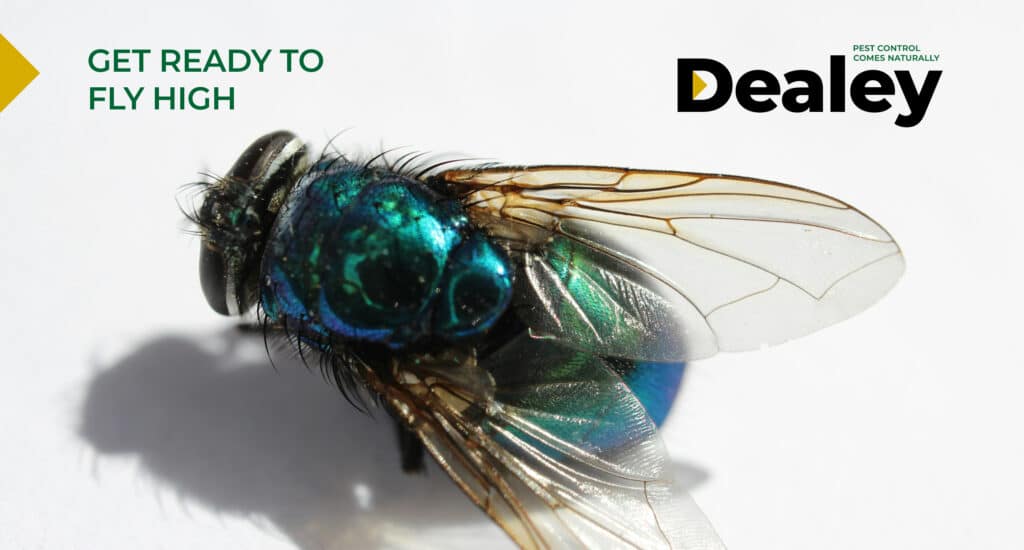
“You may have seen a housefly, maybe even a drain fly but I bet you ain’t never seen a broad-headed fly!” No, we’re not quoting Donkey from Shrek…well maybe just a little bit. But how else can we get your attention when we’re about to tell you all the fun facts about flies?
We promise in this article; we won’t bring up The Fly with Jeff Goldblum – we might be used to dealing with bugs and insects but even we were freaked out by that one!
We think flies are pretty cool. Yes, they might be irritating when they buzz around your picnic. And yes they can carry various diseases (which we will talk about later) but they do play a vital role in our ecosystem, which is why we are flying the flag for the order Diptera.
They are never flying without wings!
Here’s a cool fact for you…
Did you know many different species of fly within the order Diptera might only have one functional pair of wings which are used for flying but they might also have a second pair of hindwings called halteres that help with balance during flight?
You also might not know that some flies aren’t actually very good at flying! We know that sounds absolutely mad. But species like drain flies aren’t strong fliers – they prefer to make short, jerky flights. In contrast, species like houseflies have a strong, rapid take-off because they are much more agile.
Here’s another cool fact for you…
There are potentially 120,000 different species of fly – that we know of. Some people believe there could be as many as 150,000 different species which is pretty mind-blowing when you think about it.
With so many different types of flies available, you probably won’t know which species is causing your infestation. But we can identify them for you and provide the treatment you need.
Here’s a quick overview of some of the most common species of fly you’ve probably heard of.
| Type of fly | What is their habitat? | Distinguishing features? | Why we love them | Why you hate them |
| House Fly | These are the most common types of flies seen in the UK. They like warm, dry environments and are typically spotted during the warmer months – but you already know that! | They have grey bodies, large eyes and four narrow, black, longitudinal stripes on their thorax. | Houseflies are scavengers. They want to eat decaying, rotted materials which helps with decomposition.
They are also a useful food source for birds, spiders, and reptiles. |
They regurgitate digestive enzymes onto solid food to liquefy it before ingestion (ewwwww!)
This means they can spread pathogens and other diseases. |
| Drain Fly | Moist environments like drains, sewers or areas with standing water. | Their little bodies are covered in tiny hairs, making them look fuzzy. | They break down organic matter, helping for more nutrients to be added to water-based ecosystems.
They are a clear indicator you might have drainage or plumbing issues. |
Their life cycle from egg to adult can be as little as one week, so an infestation can quickly break out and be difficult to control. |
| Fruit Fly | As you would expect from the name, fruit flies can be found near fermenting fruit and other decaying plant material. | They have many genetic mutations, affecting traits like eye colour, wing shape, and body size.
They are also known for their mating dances and territorial behaviours! |
The fruit fly genome has been extensively mapped, and it shares many genes with humans, making it valuable for studying gene function, development, and disease.
You have to admit, that’s really cool! |
They can carry bacteria such as salmonella, E. coli, and listeria. |
Time flies when you’re transitioning from egg to adult
The lifecycle of a fly is pretty standard, whatever the species.
- The female lays an egg in decaying, organic matter.
- The egg hatches into larvae, which usually look like maggots and feed on the decaying matter.
- The larvae enters the pupal stage which is where it forms a protective casing and starts its transition from maggot to a fully-formed adult fly. This might take a few days, or it could take several weeks.
- The adult emerges and is immediately able to fly and recommence the reproductive cycle.
How long the lifecycle takes will depend on the type of fly and the environmental conditions. A house fly egg can hatch in just 12-24 hours and they might have a lifespan of just 28-30 days. Similarly, a fruit fly might live between 40-50 days, while a horse fly might live between 30-60 days!
With such discrepancy between lifespans, it’s essential to identify what type of fly is causing your infestation. That’s where our buzzy superpowers come in handy – we can easily identify your flying trespassers for you and use our skills to zap the eggs, larvae, pupa and adults.
Why are flies a problem for your business?
On the face of it, flies aren’t too bad.
But if left untreated, a fly infestation (no matter what species) can cause serious problems for your business.
As we’ve just identified, some species can carry serious diseases which can cause serious health hazards and put you at risk of non-compliance with regulatory duties. They can also be a reputational risk – customers might be prepared to deal with a few flies buzzing around, particularly if you are outdoors, but if there are swarms of flies, it could indicate poor hygiene and contribute to falling footfall.
If you think you’ve got a fly problem, give us a call because we know how to get rid of them quickly, with minimal fuss or disruption to your business.
Is it possible to turn your premises into a no-fly zone?
The good news for you is that becoming a no-fly zone doesn’t need any involvement from air traffic control!
In fact, there are several easy steps you can take to reduce the likelihood of flies landing on your commercial property.
For instance – if you spot drain flies near your sewers and drains, think of it as a warning sign to check your drainage and plumbing for other problems. The first step is to remove any organic matter and dry out the area as much as possible. Making it unwelcoming and unappealing to flies will deter them from setting up home. Remember, your job is to focus your hospitality on your human guests, not your entomological ones!
Where possible try and reduce food sources and make sure any spillages are correctly cleaned up. Flies can squeeze through tiny little gaps, so using sealant on any cracks in your doors and window frames is always a good idea.
You can also try things like fly screens, sticky traps and light traps to repel them. But once they have made a home, your infestation will need our team of experts to deal with the matter for you. Allow us to come in and figure out what the root cause of your fly problem is, and we can get you fixed up and ready to go.
Contact us today if you’re concerned there are too many flies on your property.