If you’re struggling with repeated issues relating to insects and pests, you may have been told that it’s almost inevitable and something that you have to deal with. Something may have worked last year, but doesn’t anymore because the pesky little blighters are far cleverer than us.
But that’s not entirely true.
If we’re really honest (and you know us, we always are), insecticide resistance does not arrive overnight. In fact, it’s invited in, made comfortable and asked to stay as long as it wants.
How do we know this for certain? Well, it’s because we embrace our pest geekiness, and there’s nothing we love more than poring over data and research to look at how things have changed.
Recently, we had a thoroughly enjoyable time reviewing historical technical data on phosphine dosages against grain-infesting pests, and something caught our attention.
The application rates were dramatically lower than those used today. In fact, it was around five times lower, which seemed crazy. The data confirmed perfect results—a total wipeout of the pests, with complete control.
At first, we thought this couldn’t be right; surely there was a typo or a mistake somewhere.
Then the reason became obvious.
The study dates back to the 1970s.
So, what happened? Did insects suddenly become smarter? Did they collectively evolve a grudge against grain stores and food factories? Are we living in some super pest-villain alternate universe?
We did the only thing we could do. We went straight to the one person who would have the answer: our head honcho, Martin Cobbold.
He was very clear on this, telling us, “They didn’t get smarter. We trained them.”
The insects we fight are world travellers.
Out of the twenty or so species of stored product insects commonly found in grain handling, milling, food manufacturing and storage facilities across the UK, only a small handful are actually native.
That tells us almost everything we need to know.
The pests, bugs and insects that you’re fighting against have been hitchhiking around the world for decades. They’re tagging along undetected, moving through supply chains that prioritise speed and efficiency above almost everything else. We know that around the world, supply chains are working faster than ever before, but what we didn’t know was that the insects were keeping up just fine!
For food manufacturers and grain operators, this matters because it means that insecticide resistance does not originate on-site. It arrives pre-trained and quietly settles into systems that allow it to survive.
But that only tells us part of the story.
Pests used to be easy kills, now they are operational headaches
That historical data is 50 years old, and there’s no doubt that the insects that challenged food facilities in decades past were far easier to control.
If their ancestors were weak, then today’s pests have turned into superbugs, ready to give us hell.
This is because, historically, pest control practices weren’t very effective. Decades of poor practice around the world have meant that we’ve trained these bugs to be tougher than ever. Businesses can no longer get away with imperfect treatments or suboptimal strategies.
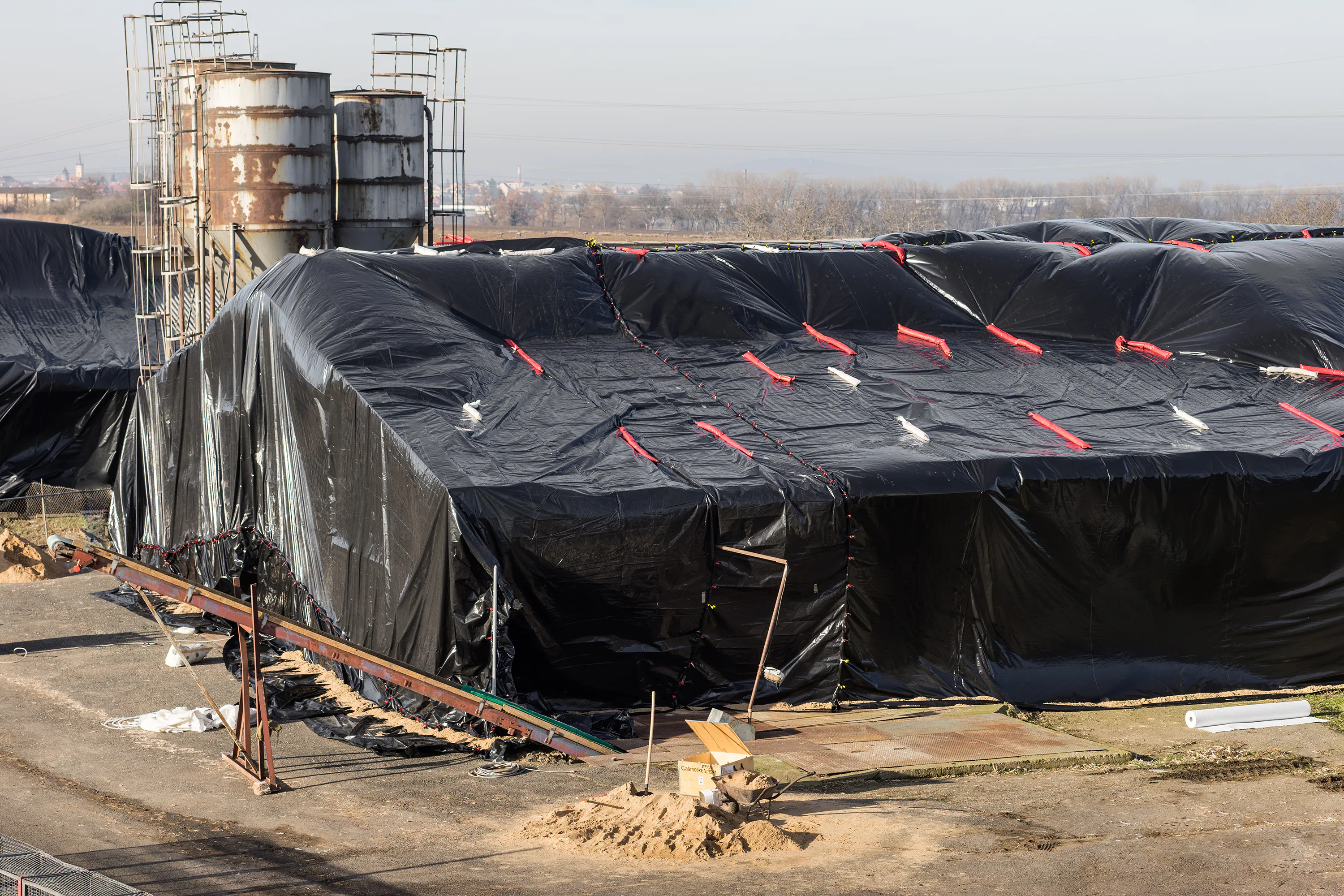
Around the world, businesses have undergone low-dose fumigations. At the same time, structures haven’t been properly sealed, and exposure periods have been shortened, all because businesses are under pressure to keep supply chains and production logistics moving as quickly as possible.
The negative impact of this means that treatments have been carried out to tick a box rather than eliminate the pest problem entirely.
As Martin explains, “All of that creates exactly the conditions resistant insects need to survive. Then evolution comes into play, and their biology adapts and changes to make them far stronger.”
Resistance is not a sudden failure.
In manufacturing environments, resistance is often spoken about as though it were an ambush.
One season everything works, the next it doesn’t, and before you know it, you’re dealing with inconsistent results, more downtime, and they’ll come back again and again. Then, before you know it, your audit reports include the dreaded phrase, “suspected resistance”.
There’s a never-ending narrative that it’s almost inevitable and something you should expect, despite all best efforts.
But in reality, resistance is the delayed consequence of a long series of marginal decisions made under commercial pressure.
- That seal that was nearly airtight; it’ll be good enough
- A dose that was close enough; that’ll do the trick
- A fumigation is shortened to minimise downtime; the quicker you’re up and running, the better!
But most worrying of all is the assumption that your site will behave like it always has in previous fumigations.
As Martin says, “Biology does not care about production targets or audit calendars. As soon as you start to assume things, that’s where it goes wrong.”
Insecticide resistance is just insect survival.
The phrase insecticide resistance sounds far grander than it really is. It all boils down to one thing: you haven’t done enough to kill the insects.
It’s literally evolution in action, because if an insect survives a sub-lethal exposure or a rushed fumigation, it does what it is exceptionally good at doing. It continues to live and passes that tolerance on to the next generation.
What humans have done over 50 years is create a selective breeding programme of pests, bugs and insects. We’ve literally helped them become stronger than ever, because it’s all about survival of the fittest.
As Martin says, “Resistance is very often the delayed consequence of wanting the fumigation finished quicker, more than wanting it finished properly. It’s what happens when you focus on the treatment as a matter of compliance and paperwork rather than a framework. It’s when you reward speed and convenience over discipline and verification.”
“It bears saying, though not loudly, that resistance is not a moral failing. But it is rarely a mystery.”
The most effective pest control operators are often the boring ones
Not us personally, of course, our entire team is a hoot!
But the teams that can avoid insecticide resistance are the ones that do the job quietly and properly. They’re not armed with flashy tools or high-end tech; the focus is on the fundamentals that get the job done right the first time and every time.
- You should be looking for teams that seal sites properly, preventing any signs of ingress.
- The ones who know how to monitor what’s happening even when it’s inconvenient
- The team will outline exactly how much time is needed for the work to do what it needs to do.
- The team that will measure outcomes carefully and will have a plan B, plan C and even plan D ready for immediate action
You can’t negotiate with pests and bugs; you need to be persistent, patient and consistent.
It’s the shortcuts that cause the problems.
When resistance starts to compromise your operation, we have the solution you need.
Insecticide resistance does not mean loss of control, but it does require a change in approach, and that’s where we stand out from others.
We recognise that in food manufacturing and grain-handling environments, repeating a failed treatment introduces unnecessary risk to your product integrity, audit outcomes and brand reputation. And if you are repeating the same process, you’ve still got no guarantee it will make a difference.
That’s why when resistance is suspected, the correct response is investigation, not escalation.
When it comes to phosphine-resistant insects, we use modern, evidence-led protocols to diagnose and manage resistant populations. Our robust protocols mean laboratory testing to identify tolerance levels and guide treatment strategies that restore control without unnecessary exposure or disruption.
As Martin says, “Resistance does not arrive suddenly; it is invited in. That’s why you need the right systems, discipline, and an evidence-based response to show it back out again.”
If you think resistance is a problem on your site and what you have always done has stopped working, get in touch.
Send us a sample of your insects.
We will do the rest.