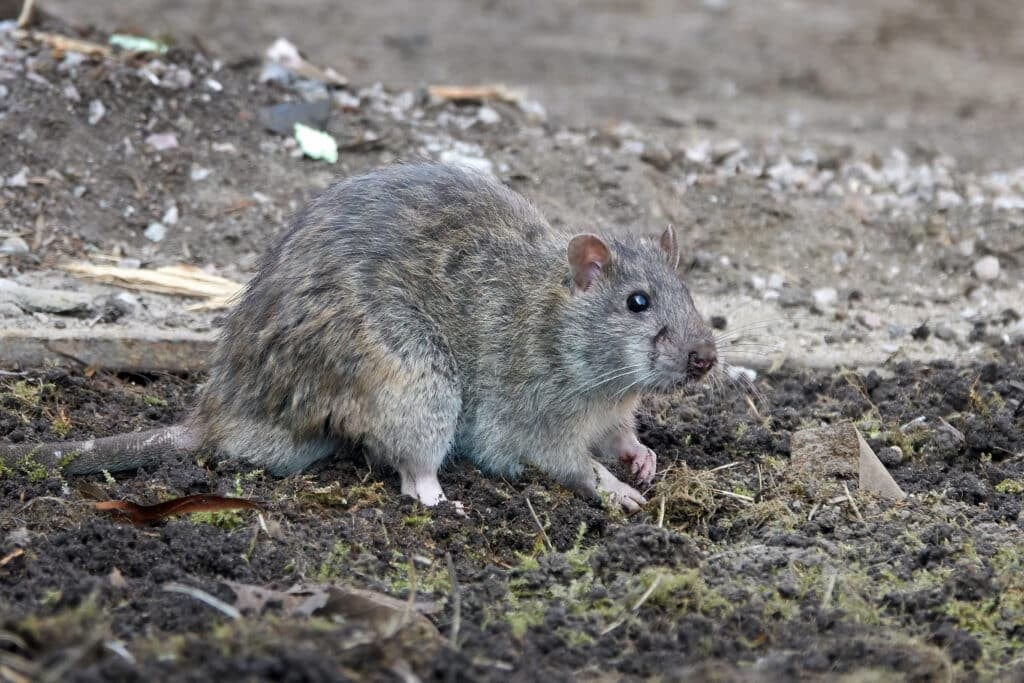
To get rid of rats on a farm, you need a planned approach that combines habitat management, proofing, and the responsible, targeted use of rodenticides rather than simply scattering bait. Effective agricultural rodent control starts by making the farm inhospitable to rats, then uses monitoring and professional baiting where needed, all within the law. This matters more than ever, because the rules on who can buy and use professional rodenticides have tightened significantly.
This guide explains how professional rat control works on UK farms, why responsible baiting protects your livestock and local wildlife, and what the current rodenticide stewardship rules mean for growers and livestock keepers.
Why are rats such a problem on farms?
Farms offer rats everything they need: a reliable food supply, water, warmth, and abundant places to nest. Grain stores, animal feed, bedding, and waste all act as magnets, and the surrounding land provides cover and burrowing opportunities.
Left unchecked, a rat population grows quickly and causes real damage. The main risks for farm businesses include:
- Contamination: rats foul grain, feed, and surfaces with droppings and urine, spreading disease and triggering rejected loads.
- Structural damage: gnawing damages wiring, insulation, water pipes, and building fabric, creating fire and flood risks.
- Feed loss: rats eat and spoil far more stored feed and grain than they consume directly.
- Assurance failures: visible rodent activity can jeopardise farm assurance status under schemes such as Red Tractor and TASCC.
How do professionals get rid of rats on a farm?
Responsible rat control follows a planned sequence that starts with the lowest-risk methods and only uses rodenticide where it is justified. The CRRU UK Code of Best Practice sets out this hierarchy, and professional pest controllers work through it as follows:
- Survey and risk assessment. Identify activity, entry points, harbourage, and any non-target wildlife before any treatment begins.
- Habitat management. Remove food sources, clear rubbish and vegetation, and deny access to water to make the site less attractive.
- Proofing. Block entry points into buildings and stores so rats cannot get to feed and shelter.
- Monitoring. Use non-toxic monitoring bait and inspection to confirm activity and pinpoint where treatment is genuinely needed.
- Targeted treatment. Apply rodenticides or trapping precisely where required, then remove bait once control is achieved.
This planned approach reflects Dealey’s own ethos of prevention and deterrence, moving a site from active extermination towards routine monitoring rather than permanent baiting.
How do you stop rats eating bait instead of grain?
One of the biggest challenges of rat control on farms is competition from the food already on site. When a grain store holds hundreds of tonnes of feed, rats have little reason to take bait, so untargeted baiting often fails.
Experienced agricultural pest controllers solve this by reducing access to spilled and stored food first, then placing bait in secured stations along established rat runs so rodents are encouraged to feed on it. Pairing this with grain store treatments and good store hygiene tackles both rodents and store product insects as part of a single protection plan.
How does responsible rat control protect wildlife and livestock?
Rodenticides can harm non-target animals if used carelessly. Birds of prey such as barn owls and kestrels feed largely on wild small mammals, and poorly managed baiting has been linked to rodenticide residues building up in these species.
That is why the stewardship regime moves farms away from routine, permanent outdoor baiting and towards planned, time-limited treatment. Responsible control protects barn owls, pets, and livestock by:
- Using secured, tamper-resistant bait stations rather than open bait.
- Removing rodenticide once an infestation is controlled, rather than leaving it down indefinitely.
- Recording and collecting any dead rodents to prevent secondary poisoning.
- Combining baiting with trapping and habitat control to reduce reliance on chemicals.
What are the rules on buying and using rat poison on farms?
UK rodenticide use is governed by the UK Rodenticide Stewardship Regime, overseen by the Campaign for Responsible Rodenticide Use (CRRU) and reporting to the Health and Safety Executive. Two changes are particularly important for farmers.
First, since January 2025, second-generation anticoagulant rodenticides can no longer be used in open areas away from buildings, restricting where outdoor baiting is permitted. Second, according to CRRU stewardship guidance, proof of competence requirements have tightened, and farm assurance membership alone is no longer accepted as proof of competence to buy professional rodenticides.
In practice, this means many farmers now face a choice: obtain the required certification and apply products strictly to the Code, or appoint a qualified professional. For most farm businesses, using a trained contractor is the simplest way to stay compliant while keeping rats under control.
Why choose Dealey Environmental for farm rat control?
Dealey Environmental has served the East Anglian farming community for over sixty years, with a team whose roots are in agriculture. Treatments follow the CRRU Code of Best Practice, begin with an environmental risk assessment, and use baiting plans tailored to each site so other wildlife, products, and livestock are protected.
As members of the British Pest Control Association, Dealey’s technicians are trained, insured, and experienced in guiding farms through TASCC, ACCS, and Red Tractor audits. The result is responsive, agricultural pest control that understands the realities of farm life rather than a one-size-fits-all approach.
Got a rat problem on your farm?
Our team will assess your site and build a responsible, compliant rodent control plan that protects your grain, livestock, and assurance status. Contact Dealey Environmental today to arrange a farm visit.